
How to Watch Coastal Seals and Seabirds Responsibly from a Kayak
Why Calm Waters and Wild Encounters Belong Together
Sea kayaking offers a wonderfully close view of the coast. From a stable cockpit, you can look beneath sea cliffs, explore rocky coves and notice details that are easily missed from a footpath, from the changing colour of the water to a seal lifting its head among the kelp. The experience is quiet by nature, which makes a kayak an excellent platform for wildlife watching when it is used with care.
The aim, however, should not be to collect the closest possible photograph or tick every species off a list. A better approach is mindful observation. By slowing down, keeping your distance and allowing animals to decide whether to remain, you protect fragile coastal habitats while making the encounter more rewarding. Calm attention can also support your own wellbeing. The steady rhythm of paddling, the open horizon and the need to notice wind, tide and wildlife create a restorative form of concentration that is difficult to reproduce on land.
Reading the Subtle Body Language of Resting Seals
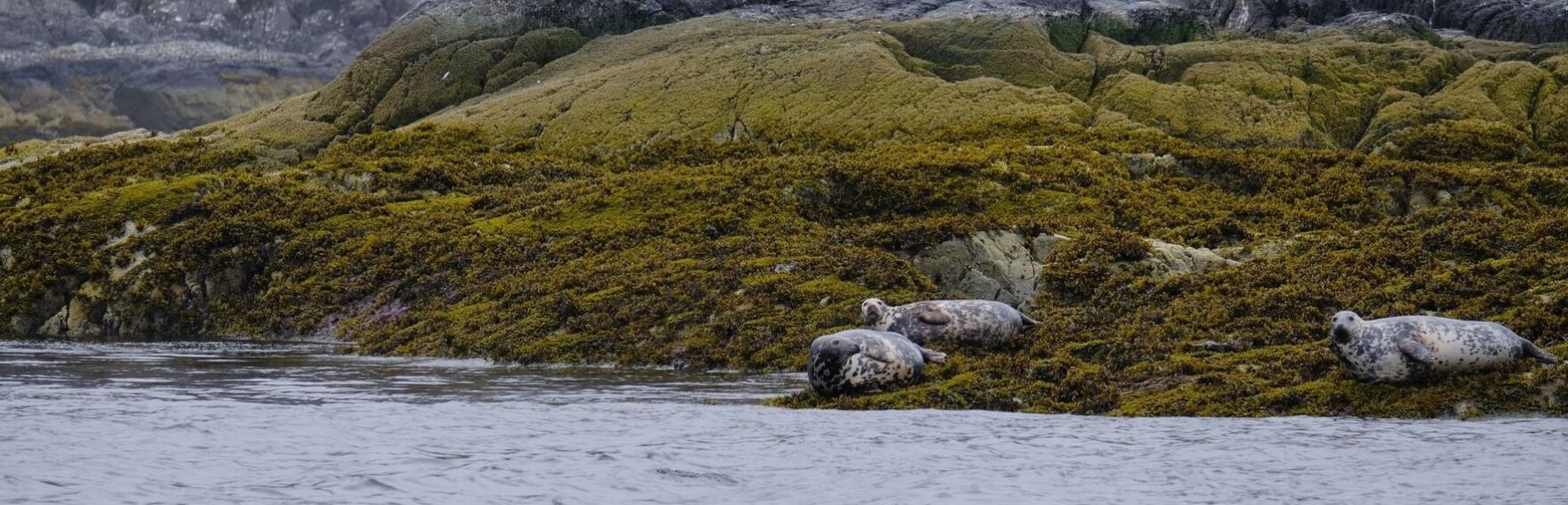
Rocky haul-out sites are not simply convenient places where seals happen to lie. Seals use land and exposed rocks to sleep, digest food and give birth. Pups and nursing mothers are especially vulnerable, while every seal needs undisturbed time to recover energy between periods in the water. Although seals are comfortable in the sea, they can feel exposed on land, so a kayak that approaches too closely may create a serious interruption even if no one touches the animal.
Watch the seal rather than concentrating only on your camera. A relaxed animal may remain still, breathe normally and return its attention to resting. Initial curiosity is different from fear. The seal may turn its head, raise its gaze or briefly follow your movement. These are useful signals to increase your distance before concern develops. Head-weaving, repeated head-turning, shifting position and a raised, tense posture suggest that the animal is monitoring you closely.
More obvious reactions mean that the kayak is already too close. Splashes, vocalisations and repeated movement can progress to a sudden rush into the water, sometimes called flushing. A seal that launches abruptly from a rock may be forced to abandon rest, feeding or care of a pup. If you see an alert response, do not wait for a more dramatic warning.
- Stop forward paddling and assess your position, wind and current.
- Use quiet reverse strokes to increase the gap without turning suddenly towards the seal.
- Keep your voice low and avoid pointing, shouting or making repeated paddle splashes.
- Never land on a seal colony, approach a pup or feed any seal.
- If the animal continues watching you, move farther away and leave the area.
For a useful framework on distinguishing natural resting behaviour from acute distress, consult the Marine Life Viewing Guidelines. The exact legal requirements vary by country and species, but the underlying principle is consistent: if wildlife changes its behaviour because of your presence, create more space.
Paddling Near Sea Cliffs and Nesting Colonies
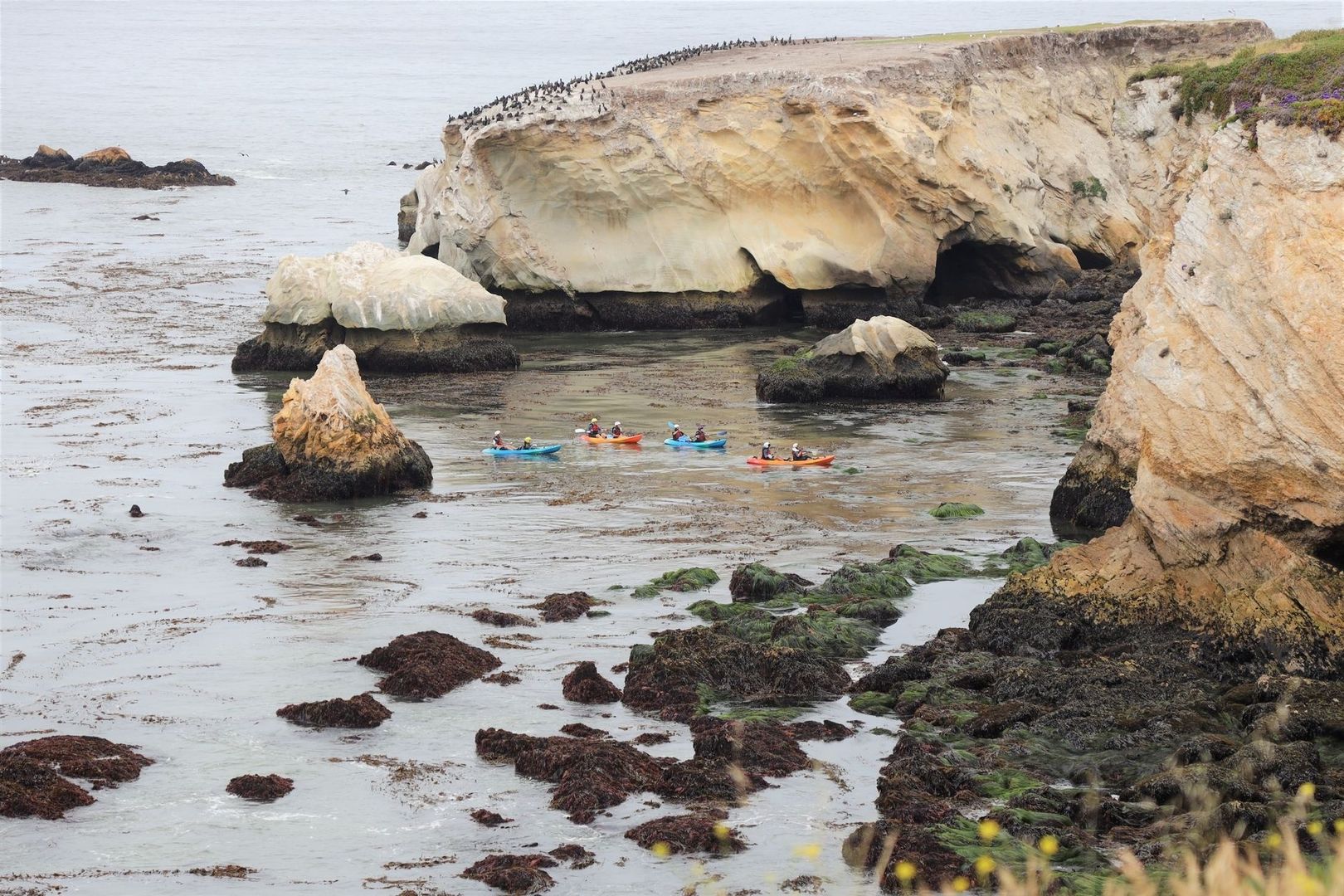
Seabird cliffs can look robust, but the birds using them may be operating within a narrow margin of safety. Breeding colonies are particularly sensitive from spring into mid-summer. The Jersey Wildlife Watching Code identifies a seabird season from 1 February to 15 July, with a peak from mid-May to early July. Dates differ between locations and species, so check local advice before launching. At well-known colonies such as Bempton Cliffs, hundreds of thousands of seabirds gather between March and August, with April to July being an important nesting and breeding period for puffins, gannets, kittiwakes and guillemots.
A kayak approaching the base of a cliff can disturb birds even when the paddler believes the route is well clear. Listen for a sudden change in the colony. Agitated alarm calls, frantic wing fluttering, repeated head movements and birds leaning away from the water can all indicate concern. A large, sudden lift-off is an especially clear warning. Do not interpret it as a spectacular display or an invitation to move closer. It may mean adults have abandoned a ledge temporarily, leaving eggs or chicks exposed.
Accidental flushing can have serious consequences. Eggs and young birds may fall from ledges, while chicks left unattended can become vulnerable to predators, cold weather or overheating. Keep at least 50 metres from seabird colonies where local guidance recommends that distance, and avoid narrow ledges, nesting beaches, dunes and known burrow sites. A quiet route farther offshore is nearly always the better route.
- Plan around the breeding season rather than treating it as an afterthought.
- Pass colonies quietly and maintain a generous, visible buffer.
- Do not enter sea caves or narrow channels if doing so would leave birds or seals boxed in.
- Turn away at the first signs of repeated alarm calls or flock movement.
- Keep landings away from vegetation, burrows, shingle beaches and seal resting areas.
A Field Comparison of Calm Versus Distressed Coastal Wildlife
Reading behaviour becomes easier when you compare a settled response with an active disturbance response. The following guide is not a replacement for local regulations, because species, locations and seasons can require wider boundaries. It is a practical decision-making tool for ordinary paddling situations.
| Wildlife state | What you may notice | Recommended response |
|---|---|---|
| Seal appears settled | Still posture, normal breathing and no repeated tracking of the kayak | Keep well away, paddle slowly and continue on a predictable line |
| Seal is becoming vigilant | Head-turning, head-weaving, shifting position or sustained attention | Stop approaching and reverse quietly to increase the distance |
| Seal is distressed | Splashes, vocalisation, rapid movement or sudden entry into the water | Leave the area immediately and do not follow |
| Bird colony appears settled | Normal calling, birds remaining on ledges and routine movement | Stay at least 50 metres away where advised and pass steadily |
| Birds show concern | Alarm calls, wing fluttering, repeated leaning or head movements | Change course away from the cliff and reduce noise |
| Colony is disturbed | Sudden flock lift-off or adults leaving nests | Move farther offshore and do not return for a closer look |
For a wider UK framework covering marine mammals, birds and other coastal wildlife, read the Marine and Coastal Wildlife Code. In the United States, NOAA guidance commonly recommends at least 50 yards from seals, sea lions, dolphins, porpoises and sea turtles, although local rules may require more. Always check the regulations that apply to the coast you are visiting.
Wind and current affect your position more quickly than many beginners expect. Avoid drifting downwind or down-current towards animals, because correcting course later may require noisy, forceful strokes. Approach no wildlife deliberately. Instead, choose a line that keeps the wind and current carrying you away from the colony or haul-out site. If conditions make it difficult to hold that line, leave a wider gap or abandon the route. Good wildlife watching begins with sound boat control, not with getting closer.
Practical Techniques for Low-Impact Kayak Navigation
The safest encounter is one in which wildlife can continue behaving normally. That means avoiding situations where animals feel trapped between your kayak and a cliff, beach or cave entrance. Narrow coastal features deserve particular caution because a kayak may occupy much of the available escape route. If seals are resting on one side of a cove, do not paddle into the opposite side simply to obtain a better view. Give the whole area room and keep moving.
Predictability matters as much as distance. A steady, quiet course is easier for animals to understand than a kayak that approaches head-on, stops repeatedly, turns sharply and circles. Keep groups compact rather than spreading across the water. A line of several kayaks can create a moving barrier, especially in a narrow inlet. Group leaders should brief everyone before launch and make it clear that the first person to see a disturbance signal can call for the group to leave.
Waterproof binoculars are one of the best pieces of wildlife equipment you can carry. They allow you to see plumage, behaviour and individual features without treating the kayak as a floating viewing platform pressed against a colony. A camera with optical zoom can serve the same purpose. The photograph is optional; the animal’s ability to rest, feed and care for its young is not.
- Study the chart, tide information, weather forecast and local wildlife advice before launching.
- Set a conservative viewing boundary before you reach a colony or haul-out site.
- Maintain a steady line, using small strokes and a quiet voice rather than repeated corrective movements.
- Watch for body-language changes in the animals and respond at the earliest warning sign.
- Keep the group together, avoid blocking escape routes and leave without waiting for a dramatic reaction.
- Carry litter back to shore, avoid damaging vegetation and keep food scraps away from wildlife.
These habits also protect the wider coastline. Repeated disturbance can make animals spend energy fleeing instead of resting or feeding, while careless landings can damage algae, tidepool life, plants and nesting burrows. Choose durable access points, carry the kayak over sensitive ground and leave every landing place tidier than it was found. Responsible paddling is not only about the moment you spend looking at an animal. It includes everything that happens before launch and after landing.
Become a Mindful Guardian of the Open Coast
Patient observation changes the character of a sea-kayaking trip. Rather than rushing between sightings, you begin to notice the whole setting: the direction of the swell, the sound of wings above a cliff, the way a seal rests without needing to perform for an audience. This kind of attention is good for navigation, good for mental wellbeing and far kinder to wildlife than a checklist approach.
Coastal animals and paddlers share the same open spaces, but sharing does not mean demanding proximity. Choose restraint over the perfect angle, leave room for animals to move and treat every unexpected encounter as a privilege that may end quickly. Carry those quiet habits onto every future voyage, and your time on the water will become more rewarding while the cliffs, coves, seals and seabirds remain safer for the people and wildlife that depend on them.
Comments Comments: 0
Comments are closed.